
25 Years After 9/11: How Business Has Transformed in a New Era of Risk, Resilience, and Reinvention
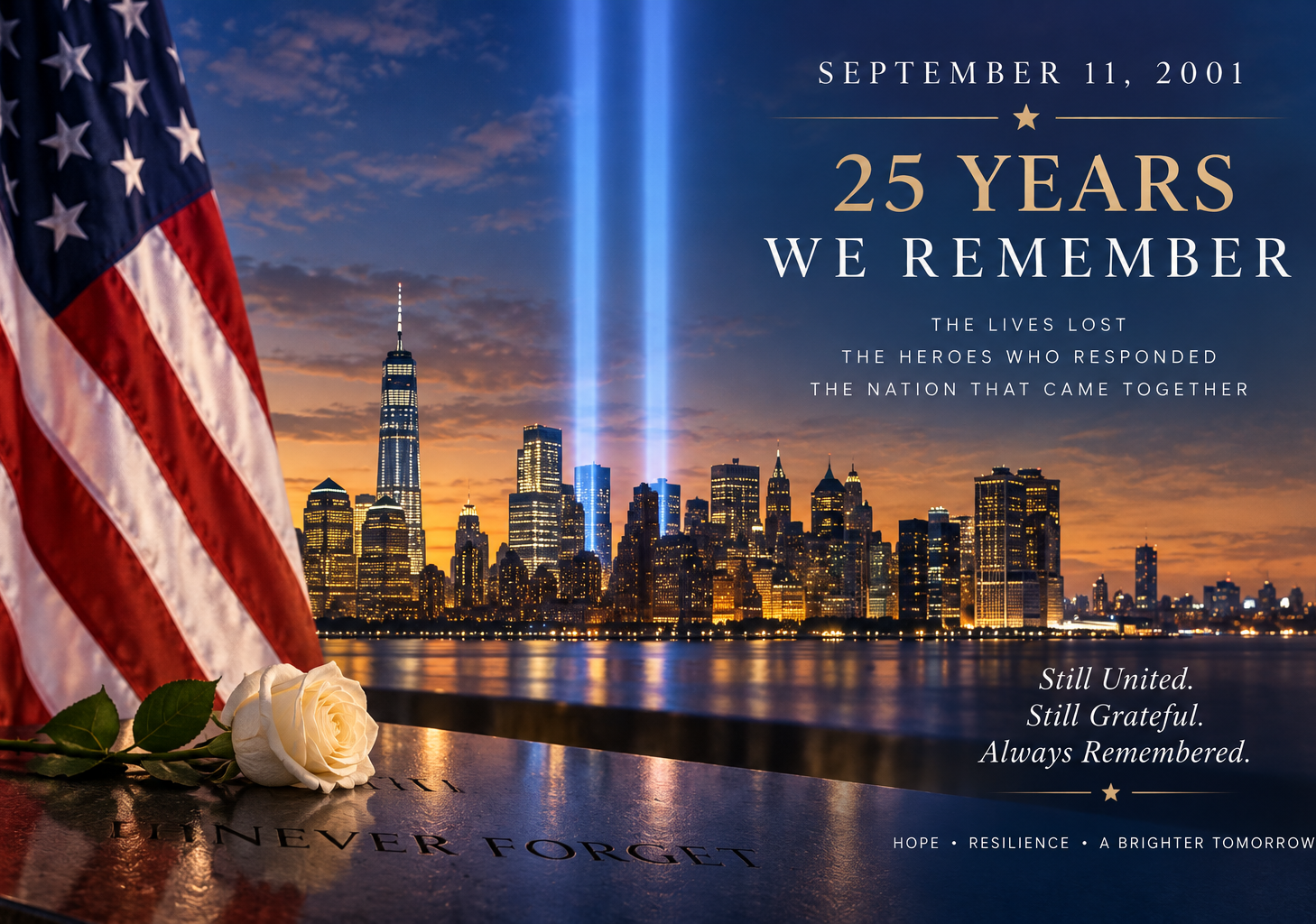
Twenty‑five years after the September 11 attacks, the business landscape looks almost nothing like it did in 2001. The events of that day reshaped the world’s sense of vulnerability, accelerated new industries, and forced leaders to rethink how organizations operate, communicate, and prepare for the unexpected. A quarter century later, the ripple effects are still visible in how companies manage security, build culture, and navigate global uncertainty.
A New Era of Security and Risk Awareness
Before 9/11, corporate security was often viewed as a practical necessity. After 9/11, it became a strategic priority.
Businesses began investing heavily in:
Physical security infrastructure
Cybersecurity programs and protocols
Risk management and continuity planning
Employee safety and emergency communication systems
The attacks revealed how interconnected global systems truly were. Companies realized that risk wasn’t just a possibility—it was a constant variable. This mindset shift laid the foundation for today’s robust security standards across nearly every industry.
The Rise of Global Interdependence
9/11 didn’t slow globalization—it reshaped it.
As supply chains expanded and digital communication accelerated, businesses became more aware of how geopolitical events could disrupt operations. This led to:
More diversified supply chains
Increased cross‑border collaboration
Stronger international compliance and regulatory frameworks
Companies learned that resilience required both global reach and global awareness.
Leadership Evolved: From Command‑and‑Control to Human‑Centered
One of the most profound changes since 9/11 has been the evolution of leadership.
In the aftermath, leaders were forced to communicate with empathy, transparency, and steadiness. Employees needed reassurance, clarity, and connection. That shift stuck.
Today’s leaders are expected to:
Prioritize emotional intelligence
Communicate openly during uncertainty
Build cultures rooted in trust and psychological safety
Lead with values, not just strategy
The modern workforce expects leaders who are present, human, and adaptable—traits that became essential in the months and years following 9/11.
Technology Became the Backbone of Business
While technology was already advancing rapidly in 2001, the post‑9/11 world accelerated digital transformation in several keyways:
Remote communication tools became essential for continuity.
Cloud computing gained traction as businesses sought more resilient infrastructure.
Data security became a top priority.
Automation and digital workflows expanded to reduce operational vulnerabilities.
The push toward digital systems wasn’t just about efficiency—it was about stability. Today’s tech‑driven business environment is a direct descendant of that shift.
Corporate Social Responsibility Took Center Stage
In the years following 9/11, businesses began to recognize their role in supporting communities, employees, and national recovery. This helped spark the modern movement toward:
Corporate social responsibility
Ethical business practices
Community engagement
Purpose‑driven branding
Consumers increasingly expect companies to stand for something meaningful. That expectation traces back to a moment when businesses stepped forward to help rebuild, support families, and strengthen communities.
Preparedness Became a Core Business Function
Perhaps the most lasting change is the normalization of preparedness.
Today, organizations routinely invest in:
Business continuity plans
Crisis communication strategies
Scenario planning
Redundant systems and backup operations
The idea that “business as usual” can be disrupted at any moment is now baked into strategic planning. Companies that thrive today are those that anticipate change rather than react to it.
A Quarter Century Later: The Legacy of 9/11 in Business
The business world didn’t just recover from 9/11—it evolved because of it. The attacks reshaped how leaders think, how companies operate, and how organizations prepare for the future.
Twenty‑five years later, the legacy is clear:
Businesses are more resilient.
Leaders are more human.
Technology is more central.
Security is more sophisticated.
Purpose matters more than ever.
The world changed on September 11, 2001. And in the decades since, business has transformed to meet a new era—one defined not only by risk, but by innovation, connection, and the unwavering drive to move forward.


Comments